Understanding the Chemistry Behind Spray Foam: How It Works
Spray foam insulation might look like a simple liquid that expands into foam, but there’s actually some fascinating chemistry at work. Understanding how it works can help homeowners see why it’s so effective for energy efficiency, moisture control, and comfort — especially in Nova Scotia’s unique climate.
💡 What Spray Foam Is Made Of
Spray foam insulation is primarily made from two chemical components:
Isocyanate (Part A) – a reactive compound that initiates the chemical reaction.
Polyol resin (Part B) – a blend of polymers that forms the foam structure.
When these two components meet at the spray nozzle, a chemical reaction occurs, producing heat and causing the mixture to expand rapidly. That expansion fills gaps, cracks, and cavities in walls, ceilings, or roofs.
✅ Pro tip: The rapid expansion is why spray foam creates a seamless air seal, unlike traditional insulation.
⚡ How the Chemical Reaction Works
The reaction between isocyanate and polyol creates polyurethane foam, a lightweight yet incredibly strong material. Here’s what happens step by step:
Mixing: Part A and Part B meet in the spray gun.
Reaction: The chemicals react, generating heat (exothermic reaction).
Expansion: The foam expands up to 30–60 times its original liquid volume.
Curing: Within minutes, the foam hardens into a rigid or semi-rigid structure, depending on whether it’s closed-cell or open-cell.
This process creates both insulation and an air barrier, all in one step — a huge advantage over traditional batt or board insulation.
🏡 Open-Cell vs. Closed-Cell: Chemistry Differences
Spray foam comes in two main types, and the chemistry slightly differs:
Open-Cell Foam
Softer, flexible, with interconnected cells
Absorbs some sound, ideal for interior walls
Lower density, R-value ~3.5 per inch
Closed-Cell Foam
Denser, rigid, with sealed cells
Acts as a vapor barrier, perfect for moisture-prone areas
Higher R-value ~6–7 per inch
Both types rely on the same base chemical reaction, but the cell structure is engineered during the reaction to create different performance characteristics.
💧 Why the Chemistry Matters for Moisture and Energy
The chemical structure of spray foam creates:
Air sealing — prevents drafts and heat loss
Moisture resistance — closed-cell foam stops condensation
Durability — doesn’t sag, settle, or degrade over time
For Nova Scotia homes, this means your attic, basement, or exterior walls stay warm, dry, and energy-efficient year-round, even in harsh coastal or maritime climates.
⚙️ Safety and Handling
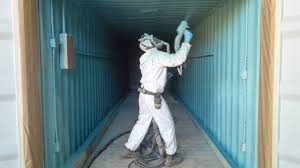
While the chemistry is amazing, it’s also reactive, which is why spray foam should always be installed by trained professionals. Proper ventilation, protective gear, and professional equipment ensure the chemical reaction occurs safely and effectively.
✅ Pro tip: Properly installed spray foam is completely safe once cured — it becomes a stable, inert material that stays in your home for decades.
💡 The Bottom Line
Spray foam insulation isn’t magic — it’s science and chemistry at work. The reaction between isocyanate and polyol creates a foam that insulates, seals, and protects your home in ways traditional insulation can’t match.
Understanding the chemistry helps homeowners see why it’s so effective in Nova Scotia’s unique climate, providing comfort, energy efficiency, and moisture protection all at once.
✅ Ready to Experience the Benefits of Spray Foam?
Our team specializes in spray foam insulation across Nova Scotia. From attics and basements to full-home upgrades, we use the science behind spray foam to give your home maximum comfort, efficiency, and protection.
📱 Call or text: 902-918-0405
📧 Email: sales@sprayfoamsquad.ca

Comments